Cobalt Blue Tiles: 700 Years of Macau’s Cultural Fusion
"Azulejo: More than mere decoration; these vibrant Portuguese tiles are the visual lexicon mapping Macau’s complex colonial history and cultural fusion."
While strolling through the narrow, winding alleys of the St. Paul's district on a Tuesday morning in 2026, the sun hits a patch of glazed ceramic, momentarily blinding you with a flash of cobalt blue and white.
It is easy to mistake these patterns for simple wall coverings, but they are actually silent storytellers of a maritime empire.
* Azulejos served as a primary narrative medium, documenting the arrival and integration of Portuguese influence in Macau. * The tiles represent a dynamic dialogue between European tradition and the unique needs and sensibilities of the East. * They are tangible artifacts illustrating Macau’s status as a crossroads of East meets West. * Understanding the tiles unlocks a deeper appreciation of Macau’s architectural DNA.

What is Azulejo and Why is it Crucial to Macau’s Identity?
The humid air of a Macau afternoon clings to your skin as you stand before a weathered facade, tracing the outline of a geometric pattern with your eyes. You might wonder why a Mediterranean tradition would find a permanent home in a subtropical Chinese territory.
According to World Bank data, Macau recorded international tourist arrivals of 5,897,000 in 2020.
The word "Azulejo" comes from the Arabic *al-zulaiq*, meaning polished stone, reflecting a history where Moorish, Spanish, and Portuguese influences converged before traveling across the oceans.
When Portuguese explorers and settlers arrived in Macau, they brought these ceramic traditions to define their new homes, churches, and public spaces. In Europe, these tiles were often used to line religious sanctums or grand aristocratic halls, providing a sense of permanence and prestige.
In Macau, however, they had to adapt.
They weren't just brought over as finished products; they became a way to transplant a sense of "home" into a landscape that was culturally and climatically foreign. As the colony grew, the tiles transitioned from purely decorative elements to carriers of cultural memory.
They served as a visual bridge, helping to establish a distinct identity that was neither purely Portuguese nor purely Chinese, but uniquely Macanese.
This rigidity of European form met the fluidity of the East, creating a hybrid aesthetic that remains visible today. But the beauty of the pattern is only the beginning of the story.
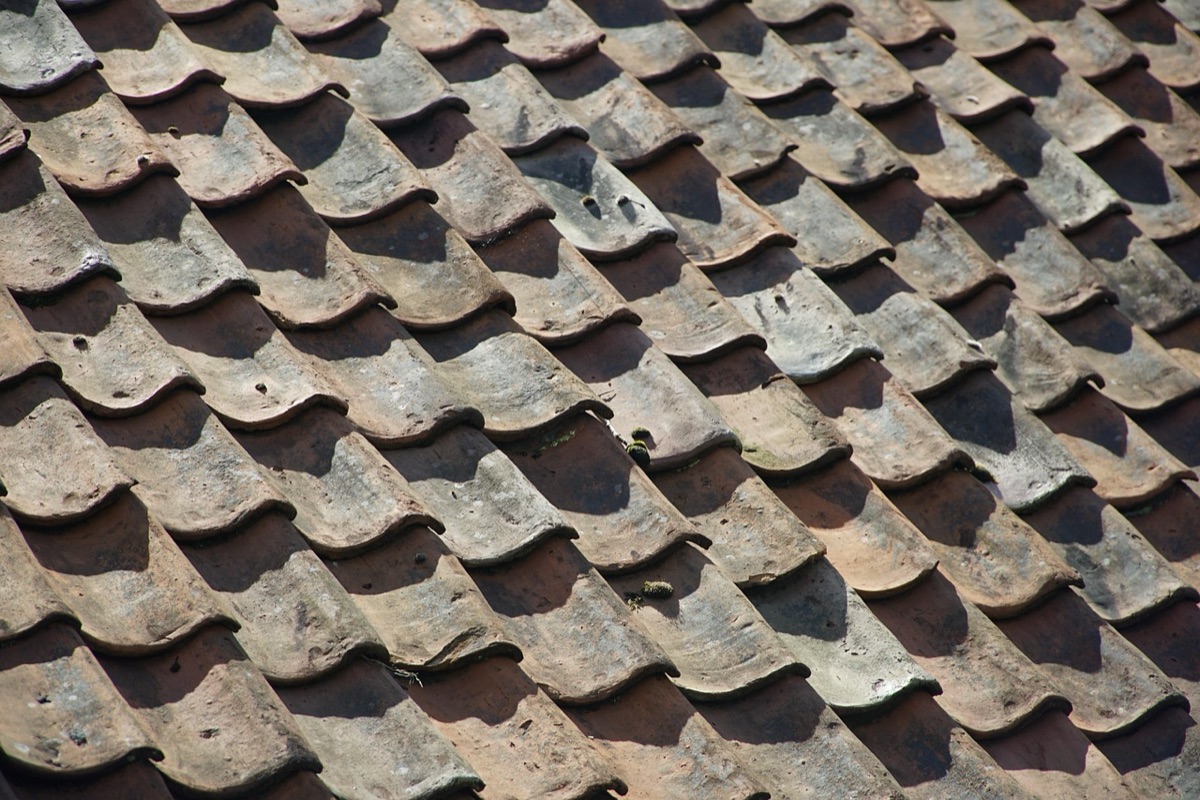
What do these motifs and symbols actually mean? You lean in closer to a tiled wall in a quiet courtyard in Taipa Village, noticing how a floral vine seems to twist in a way that feels strangely familiar, almost like traditional Chinese brushwork.
The color palette of classic Azulejos often relies heavily on cobalt blue, which was historically prized for its depth and ability to remain vibrant over centuries. In the context of Macau, these blues often stand in sharp contrast to the warm, earthy tones of local stone and wood.
When looking closely at the motifs, you can see the "fusion" in action.
While many patterns follow strict European geometric rules, you will often find subtle departures—an extra petal here, a slightly different curve there—that suggest local artisans were interpreting European designs through an Eastern lens.
In religious settings, these tiles might depict saints or biblical scenes, but in residential or public spaces, they often tell more secular stories of maritime life, nature, and mythology.
The scale of the work also tells a story: large-scale facade tiling was a statement of public presence, while small-scale interior detailing offered a private, intimate luxury for those living within the city's walls.
The patterns tell one story, but the physical survival of the tiles tells another.
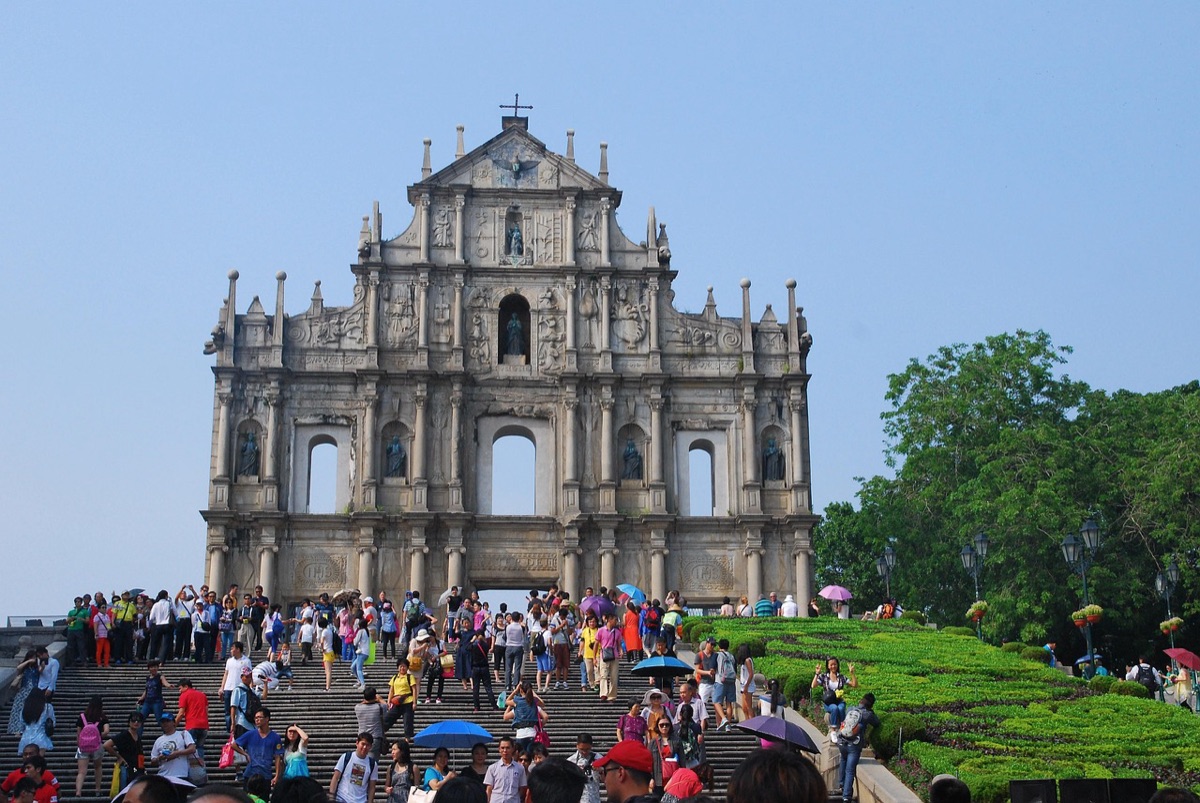
Where exactly can these treasures be found? Walking up the steep incline toward the Ruins of St. Paul's at 10:00 AM, the sound of footsteps on cobblestones echoes against walls that have survived centuries of change.
You won't find these tiles scattered randomly; they are most prominent in historic landmarks and older residential quarters where the Portuguese influence is most concentrated.
In these sites, the tiles act as a skin, protecting the masonry underneath while providing a decorative layer that defines the building's character. The installation of these tiles was a technical challenge.
Because humidity levels in Macau average around 80% annually, the bond between the tile and the wall had to be incredibly strong to prevent moisture from seeping behind the glaze and causing cracks or peeling.
Over time, the function of these tiles has shifted. What once served as a symbol of colonial grandeur now serves as a tool for historic preservation. As Macau evolved, these tiles became landmarks of authenticity, helping to define the "Old Macau" that tourists and locals alike seek to protect.
But why did they become so central to the economy and social hierarchy of the city?
Beyond Aesthetics: The Socio-Economic Role of the Tile
You stand in a quiet plaza, looking up at a grand building where the intricate tile work makes the structure feel much more imposing than its neighbors. Historically, the presence of elaborate Azulejo work was a clear status symbol.
It signaled the wealth and social standing of the patrons—whether they were high-ranking colonial officials or prosperous merchant families.
To own a house adorned with fine ceramics was to announce one's connection to the wider, sophisticated world of the Portuguese Empire. Beyond status, there was a practical, socio-economic necessity to the medium.
In a subtropical environment, ceramic tiles provided a durable, moisture-resistant surface that was much easier to clean and maintain than painted plaster.
This made them a sensible choice for high-traffic areas and humid coastal cities. As political landscapes shifted, these tiles remained. They survived the transition of power and the modernization of the city, becoming a\\a marker of an enduring, layered culture.
They represent a period of history where trade, religion, and architecture created a permanent, physical legacy that outlasted the political structures that brought them there.
| Feature | Traditional European Azulejo | Macau-Adapted Azulejo |
|---|---|---|
| Primary Purpose | Religious/Aristocratic decoration | Structural protection & identity |
| Climate Focus | Temperate/Dry-friendly | High-humidity resistance |
| Design Influence | Purely Mediterranean/Moorish | Hybrid Sino-Portuguese motifs |
| Placement | Often interior-focused | Frequently used on exterior facades |
How to Spot Authentic Azulejos in the Wild
When I first started walking the streets of Macau, I found myself constantly checking the corners of buildings and the undersides of eaves. I realized that the most interesting pieces weren't always at eye level.
If you want to truly experience the history of the city, follow this checklist when you are out exploring the historic districts.
- Check the texture and glaze: Authentic older tiles often have slight irregularities in the surface or the thickness of the glaze, whereas modern mass-produced versions are perfectly flat.
- Look for the "fusion" motifs: Seek out patterns where European geometric shapes blend with local flora or fauna, such as peonies or lotus flowers.
- ly.
- Examine the placement: Look at the transition between the tile and the building's stone or wood. The way the tiles wrap around corners or windows often reveals the era of construction.
- Note the color depth: Genuine cobalt blue should have a depth and slight variation in tone that modern chemical prints often lack.
- Visit the residential side streets: While the landmarks are great, the most evocative examples are often found on the residential walls of the St. Paul's and Taipa areas.






Comments 0